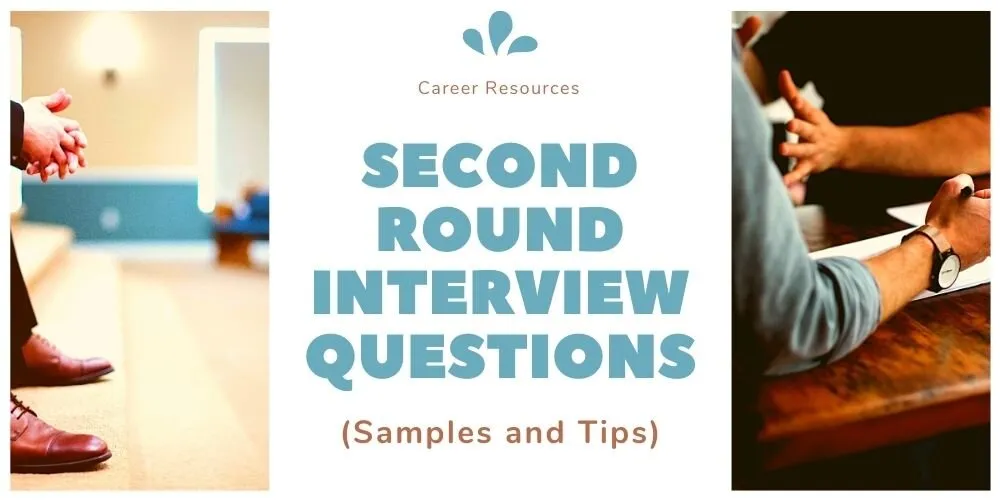
Second Interview Tips
Congrats! You passed the first interview, now what? If you're like most applicants, preparing for second interview questions should be at the top of your list. Here's what to expect in a second interview, the questions you're likely to hear, and sample answers to win over the hiring manager.
Updated November 2026: we added more second-round questions with sample answers, a section on panel and work-sample rounds, a fill-in-the-blank thank-you email, a first vs. second interview comparison table, and better questions to ask, and removed broken and off-topic links.
Questions Answered
-
How to prepare for a second interview
-
Second interview questions and sample answers
-
Is a second interview a good thing (what does it mean)?
-
What's the difference between a first and second interview?
-
Chances of getting the job after the second interview
-
What are some questions to ask the interviewer?
Second and sometimes even third interviews for the same position typically involve more detailed questions specific to you, your qualifications, and your ability to produce results for the company.
While you can't plan for every possible variation of the questions, preparing for the format, the people, and your best examples is a great way to get ahead.
How to Prepare for a Second Interview
1. Ask for the Agenda
Ask the manager or recruiter who sets up the interview if there is an itinerary. Good questions to ask when you confirm:
-
Who will I be meeting with, and what are their roles?
-
How long is each conversation?
-
Will there be a presentation, skills test, or work sample?
-
Is this in person, on video, or a mix?
Knowing the format and who you'll meet keeps you prepared. Look each person up on LinkedIn so you know what they work on, and plan a question or two for each of them. A future teammate cares about different things than the department head does.
Related:
-
35 Damaging Interview Mistakes (What NOT To Say In An Interview)
-
6 Steps to Write a Second Interview Thank You Email (with Examples)
2. Review Your First Interview
Write down what they asked the first time, what seemed to land, and anything you wish you had said better. Second-round interviewers often compare notes with the first interviewer, so your story should stay consistent while going deeper.
If something came up that you couldn't answer well, prepare a clear answer now. It's fine to bring it back up yourself: "Last time we talked about X, and I wanted to add..."
3. Provide Proof Of Your Qualifications
Expect to be asked for proof of your skills based on work in your past jobs.
Answer with specific examples of how you used your strengths to tackle challenges and get results. Focus on tasks similar to the ones this role needs, and add numbers where you have them (time saved, sales closed, tickets resolved, people trained).
A simple way to structure each example is STAR: the Situation, the Task you owned, the Action you took, and the Result. Pick three or four strong examples before the interview so you're ready when the questions come.
4. Be Ready for Panel, Group, and Work-Sample Rounds
Employers often use second interviews to see how you work with others and how you'd handle the actual job. That can look like:
-
A panel interview: several people asking questions in one session. Make eye contact with (or look at the camera for) the whole panel, not just the person who asked.
-
A group interview or activity: other candidates in the room. Contribute ideas, build on what others say, and help the group finish the task. This isn't the time to be shy, or to talk over everyone.
-
A presentation, case, or skills test: a short project or exercise tied to the role. Ask how long you'll have, what tools you can use, and how it will be judged. Show your thinking, not just the final answer.
5. Ask Better Questions
If you get the chance to talk with people in a similar role, ask what they enjoy about the job and what a typical week looks like.
Ask the hiring manager what the biggest challenges in the role are and what success looks like in the first few months. Staying engaged and asking thoughtful questions shows you're seriously picturing yourself in the job. (More questions to ask are in the FAQ below.)
6. Send A Follow-Up Thank You Email
Send a short thank-you email to each person you met, ideally the same day. If you don't have everyone's email address, send it to the recruiter or hiring manager and ask them to pass it on.
It doesn't have to be long. Here's a simple template:
Subject: Thank you for today, (Job Title) interview
Hi (Name),
Thank you for taking the time to meet with me today. I enjoyed learning more about (a specific project, challenge, or team detail you discussed).
Our conversation made me even more excited about the role. I think my experience with (relevant skill or result) would help the team (goal they mentioned).
Please let me know if there's anything else I can share. I look forward to hearing about next steps.
Best, (Your Name)
People making hiring decisions often ask team members for their impressions, so a personal note to each person you met is worth the extra few minutes.
7. Let Them Know You Are Interested
When wrapping up, make it clear that you want the job and why you'd be a great fit (if you are interested).
If they can't tell whether you want it, it could hurt your chances. Be straightforward, and ask what the next steps and timeline look like before you leave.
Bonus Tips
-
Put your phone away (silenced, out of sight)
-
Review your notes from your previous interviews
-
Research the company's recent news and the people you'll meet
-
For video interviews, test your camera, mic, and link ahead of time
-
Be confident and curious
-
Follow up on anything you should have mentioned last time
10 Second-Round Interview Questions and Answers
Many of the questions from your first interview will come up again in the second, especially if you're meeting different people. Expect them to go deeper this time.
Be prepared to repeat why you're interested in the role, your skills, and the personal qualities that will help you succeed. Swap the parts in parentheses with your own details.
1. Why Do You Want This Job?
Example Answer: "I want this job because it focuses on (your work passion), which is one of my strongest skills. In my previous role, I (accomplishment at your previous company). I know I could bring my experience with (your skill set) here and help the team continue to grow."
2. How Can You Contribute to the Company?
Example Answer: "My experience includes (your skill), including (a skill the employer needs). From our first conversation, it sounds like (challenge they mentioned) is a priority. In my last role, I (similar result), and I'd bring that same approach here."
3. What Do You Know About the Company?
Example Answer: "From my research, I know that (company name) is a (describe what they do) that focuses on (what sets them apart). I also read about (recent project, product, or news), which sounds like a big step for the business. Your values around (value) match mine, so I'm excited about this opportunity."
4. Walk Me Through a Project You're Proud Of
Example Answer: "At (company), we needed to (situation). I was responsible for (your task). I (two or three key actions you took), and as a result, (measurable result). What I'm most proud of is (what you learned or how it helped the team)."
5. Tell Me About a Time You Disagreed With a Coworker or Manager
Example Answer: "My manager wanted to (approach), and I thought (your concern). I asked for a few minutes to walk through my reasoning and brought (data or example). We ended up (outcome). I learned that it's easier to disagree well when you come with facts and stay focused on the goal."
6. What Would You Do in Your First 90 Days?
Example Answer: "In the first month, I'd focus on learning the team, the tools, and how success is measured. By the second month, I'd take full ownership of (core responsibility). By the third, I'd like to have (a small, concrete win tied to what they told you matters)."
7. How Do You Handle a Heavy Workload or Tight Deadlines?
Example Answer: "I start by listing everything that's due and checking priorities with my manager if two things compete. During (busy period) at (company), I (how you organized the work), and we (result). I also speak up early if a deadline looks at risk instead of waiting until the last minute."
8. How Do You Use AI Tools or Technology in Your Work?
Example Answer: "I use (tool) for (specific task, like drafting first versions or summarizing research), which saves me time on (task). I always review and fact-check the output myself before it goes to anyone. I'm also happy to follow whatever guidelines your team has for these tools."
Only describe tools you actually use, and be ready for a follow-up question about how.
9. What Are Your Salary Expectations?
Example Answer: "Based on the range in the job posting and my research for similar roles in (city or remote), I'm looking for something around (number or range). I'm open to discussing the full package, including (benefits or flexibility that matter to you)."
Look up the posted pay range first. Many states and cities now require employers to include one in job postings, so check the listing before you name a number. Our salary negotiation tips covers what to say next.
10. Do You Have Any Questions for Us?
Example Answer: Always say yes. Have at least two or three questions ready for each person you meet (see the list below), and save one about next steps for the end.
Frequently Asked Questions (FAQ)
Is a Second Interview a Good Thing (what does it mean)?
While a second interview doesn't necessarily mean you got the job, getting called back is an outstanding achievement, and you should be proud of it!
Many companies run multiple rounds of interviews to make sure they pick the best candidate. When the hiring manager or recruiter calls you back, it means they liked what they saw the first time. Great job!
What's the Difference Between the First and Second Interview?
Before the first interview, recruiters or hiring managers sort through many applicants. The first interview helps them learn the basics about each candidate. The second round goes deeper.
| First interview | Second interview | |
|---|---|---|
| Who you meet | Usually a recruiter or the hiring manager | The hiring manager plus teammates, a panel, or senior leaders |
| Focus | Your background, basic skills, and interest in the role | Specific skills, real examples, and how you'd fit the team |
| Format | Often a phone or video call | Longer; may include a presentation, skills test, or work sample |
| Typical questions | "Tell me about yourself," "Why this job?" | Deeper behavioral questions, "What would your first 90 days look like?" |
| Pay and logistics | Sometimes a quick check on salary range | More likely to cover salary, start date, and references |
They will also compare you closely to the remaining candidates, and many questions from the first interview may come up again.
What Are the Chances of Getting a Job Offer After the Second Interview?
There are many variables in play (other candidates, how the interview went, how many openings there are, and whether there's another round), but if the first interview went well and you're confident about the second, things might be looking up. If you're curious, ask the employer what the next steps and timeline are.
What Are Some Questions to Ask the Interviewer?
Write a few questions down before the interview, and match them to the person you're meeting:
-
Hiring manager: What would you need to see in the first 90 days to know you made the right hire?
-
Hiring manager: What's the greatest challenge I would likely face when starting this job?
-
Future teammates: What do you like most about working here, and what does a typical week look like?
-
Senior leaders: Where do you see the team going over the next year?
-
Anyone: Is there anything I can clarify about my experience based on our conversation so far?
-
At the end: What are the next steps, and when should I expect to hear back?
Wrapping Up | Second Interview Tips
It's always best to prepare. These tips should help with that and explain the second interview process itself.
Bring your best self and act almost like you already have the job: bring examples, questions, and ideas that show how you'd help.
After the conversation, decide if the job is truly a good fit. If something is bothering you, you don't have to turn it down right away. Ask follow-up questions to clear up any concerns.
If you decide to keep pursuing the job, send your thank-you notes and keep in touch until a decision is made. Recruiters and hiring managers are often busy, so give it the time they mentioned before following up.
Best of luck out there!
Title: How to Prepare for a Second Interview (with Questions and Answers)
Category: theInterview
Tags: Second Job Interview Questions, Sample Second Round Interview Questions, Second Interview Questions Thank You Email, How to prepare for a second interview, Preparing for a second interview, Panel interview tips