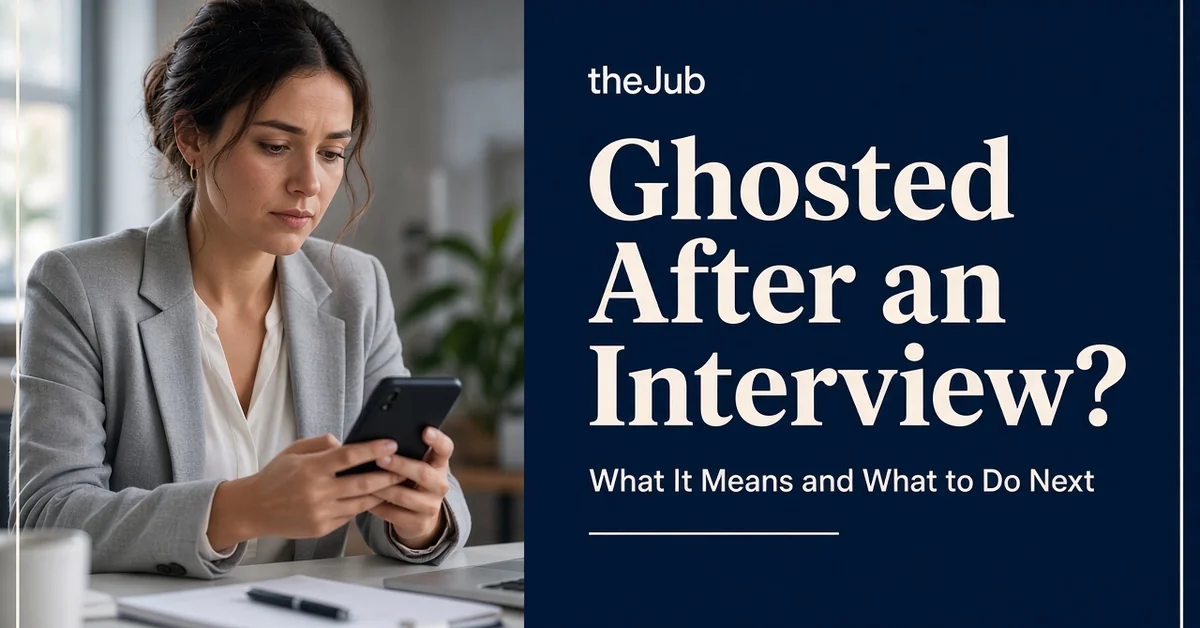
Ghosted After an Interview? What It Means and What to Do Next
You nailed the interview. You sent the thank-you note. The recruiter even said, "We'll be in touch soon." And then... nothing. No call, no email, not even a polite rejection.
If you're refreshing your inbox every ten minutes right now, take a breath. You're not crazy, and you're definitely not alone. A 2026 report from pre-employment testing company Criteria, covered by Fortune, found that 53% of job seekers were ghosted by an employer in the past year, the highest level in three years.
Getting ghosted stings. But it's usually not a verdict on you, and there's still a lot you can do. Let's walk through it.
Questions Answered
- Why do employers ghost candidates?
- How long should you wait before following up?
- What should your follow-up say?
- When is it time to move on?
Why Do Employers Ghost Candidates?
It's tempting to assume the worst. Usually, the real reason is a lot more boring.
1. They're Buried in Applications
AI tools have made it easier than ever to apply to dozens of jobs in an afternoon. That's great for you, but it also means recruiters are sorting through far more applications than they used to. Your email may simply be sitting under a pile.
2. The Process Stalled
Budgets get frozen. The hiring manager goes on vacation. Leadership decides to "rethink the role." None of that has anything to do with you, but it can leave every candidate hanging.
3. They're Waiting on Their First Choice
Sometimes you're the backup plan, and they don't want to close the door until the first offer is signed. That's frustrating, but it also means they liked you enough to keep you around.
4. Nobody Owns the "No"
In a lot of companies, sending rejections just isn't anyone's job. It's not personal. It's a gap in their process.
How Long Should You Wait Before Following Up?
Patience is part of the game, but you don't have to wait forever. Here's a simple rule of thumb:
- If they gave you a date: Wait until the day after that date passes.
- If they didn't give you a date: Wait about one week after the interview.
- After a final-round interview: You can check in a little sooner, around three to five business days.
Hiring often takes longer than we'd like. If you want a better sense of what's normal, check out our guide to the interview-to-offer timeline.
What Should Your Follow-Up Say?
Keep it short, friendly, and easy to answer. You're not demanding an update; you're making it easy for them to give you one.
Sample Follow-Up Email
Subject: Following up on the (position) interview
Hi (interviewer's name),
I hope your week is going well! I wanted to follow up on my interview for the (position) role on (date). I really enjoyed learning about (something specific from the interview), and I'm still very excited about the opportunity.
Do you have an update on the timeline for next steps? I'm happy to share anything else that would help.
Thanks again for your time, (Your name)
Want more examples? Our guide on how to follow up with a recruiter after an interview has templates for every situation.
The Second (and Final) Follow-Up
If a week or two goes by with no reply, send one more. This time, keep it even shorter and give them an easy out:
Hi (name), just checking in one last time on the (position) role. If you've decided to go another direction, no worries at all. I'd appreciate a quick note either way so I can plan my search. Thanks so much!
That last line matters. It shows maturity, and it often gets a response when nothing else does.
When Is It Time to Move On?
Here's the honest truth: after two follow-ups with no answer, it's time to let it go. You've done your part.
Moving on doesn't mean burning the bridge. It means:
- Keep applying. Don't pause your search for one company, no matter how much you liked them.
- Lean on your network. A referral or a warm intro can get you past the pile.
- Stay professional. Don't vent on LinkedIn or leave an angry review. Hiring managers move around, and you may cross paths again.
- Take the lesson, not the blame. Look back at the interview, note what went well and what you'd tweak, and carry that into the next one.
And if they do eventually come back with a "no," you'll know exactly how to respond to the rejection email with grace.
Wrapping Up
Getting ghosted after an interview is one of the most frustrating parts of the job search. But it says more about their hiring process than it does about you.
Wait a reasonable amount of time, follow up once or twice with a short and friendly note, and then put your energy back into the opportunities that are actually moving. The right employer will be glad they heard from you.
And if you need a laugh while you wait, we've got you covered with our waiting-to-hear-back memes.
Best of luck!